
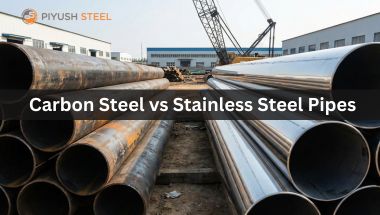
When selecting the right piping material for industrial or commercial use, the choice often narrows down to carbon steel pipes and stainless steel pipes. Both materials are widely used across oil & gas, construction, power plants, and chemical processing—but they offer different characteristics in terms of strength, corrosion resistance, durability, and cost. Understanding these differences helps industries make an informed and cost-effective choice.
What is Carbon Steel Pipe?
Carbon steel pipe is a type of steel pipe that primarily contains iron and carbon, with small amounts of other elements. The carbon content gives the pipe exceptional strength and toughness, making it a preferred material for high-pressure applications, structural use, and industries where resistance to extreme temperatures is required.
Key Features of Carbon Steel Pipes:
-
High tensile strength
-
Suitable for high-temperature and high-pressure environments
-
More affordable than stainless steel
-
Requires protective coatings or galvanization for corrosion resistance
-
Commonly used in oil & gas pipelines, HVAC systems, refineries, fire sprinkler systems, and structural applications
What is Stainless Steel Pipe?
Stainless steel pipe is produced using steel alloyed with a minimum of 10.5% chromium, which forms a protective oxide layer that provides excellent corrosion resistance. These pipes offer durability, aesthetic appeal, and hygienic properties—making them widely used across chemical industries, food processing, and marine applications.
Key Features of Stainless Steel Pipes:
-
Superior corrosion and rust resistance
-
High durability and excellent surface finish
-
Suitable for extreme temperatures, chemicals, and moisture
-
Hygienic and easy to clean
-
Commonly used in chemical plants, food & beverage, pharmaceuticals, marine environments, and water treatment systems
Carbon Steel vs Stainless Steel Pipes – Comparison Table (15 Points)
| Point of Comparison | Carbon Steel Pipe | Stainless Steel Pipe |
|---|---|---|
| 1. Corrosion Resistance | Low; requires coating or galvanization | Very high due to chromium layer |
| 2. Strength | Extremely strong and impact-resistant | Strong but slightly lower than carbon steel in toughness |
| 3. Cost | Much more affordable | More expensive |
| 4. Temperature Resistance | Excellent for high temperatures | Excellent for high & low temperatures |
| 5. Durability | Strong but prone to rust | Highly durable, long-lasting |
| 6. Maintenance | Requires regular maintenance | Low maintenance |
| 7. Chemical Resistance | Moderate | High, ideal for chemical industries |
| 8. Appearance | Rough, industrial look | Clean, polished appearance |
| 9. Weight | Heavier | Slightly lighter depending on grade |
| 10. Welding | Good weldability | Requires skilled welding (some grades are harder to weld) |
| 11. Application Areas | Oil & gas, construction, refineries | Food, pharma, marine, chemical |
| 12. Lifespan | Shorter if not coated | Long due to rust-free nature |
| 13. Hygienic Properties | Not suitable for sanitary use | Excellent hygiene, ideal for food & pharma |
| 14. Thermal Conductivity | Higher; good for heat exchange | Lower |
| 15. Environmental Impact | Less recyclable | Highly recyclable and eco-friendly |
Which One Should You Choose?
Your choice between carbon steel and stainless steel pipes should depend on:
Choose Carbon Steel Pipe If:
-
You need a cost-effective solution
-
The environment is dry or controlled
-
Strength and high-pressure tolerance are priorities
-
Applications include structural use, oil & gas pipelines, fire-fighting systems, etc.
Choose Stainless Steel Pipe If:
-
The environment involves moisture, chemicals, or seawater
-
You require corrosion resistance and hygiene
-
You need low maintenance and longer lifespan
-
Applications include food processing, marine, chemical, and pharmaceutical industries
Final Verdict
Both carbon steel and stainless steel pipes have their advantages. Carbon steel is ideal for budget-friendly, high-strength applications, while stainless steel is best when corrosion resistance, hygiene, and durability are essential. Evaluating your industry requirements, budget, and environmental conditions will help you make the right decision.