
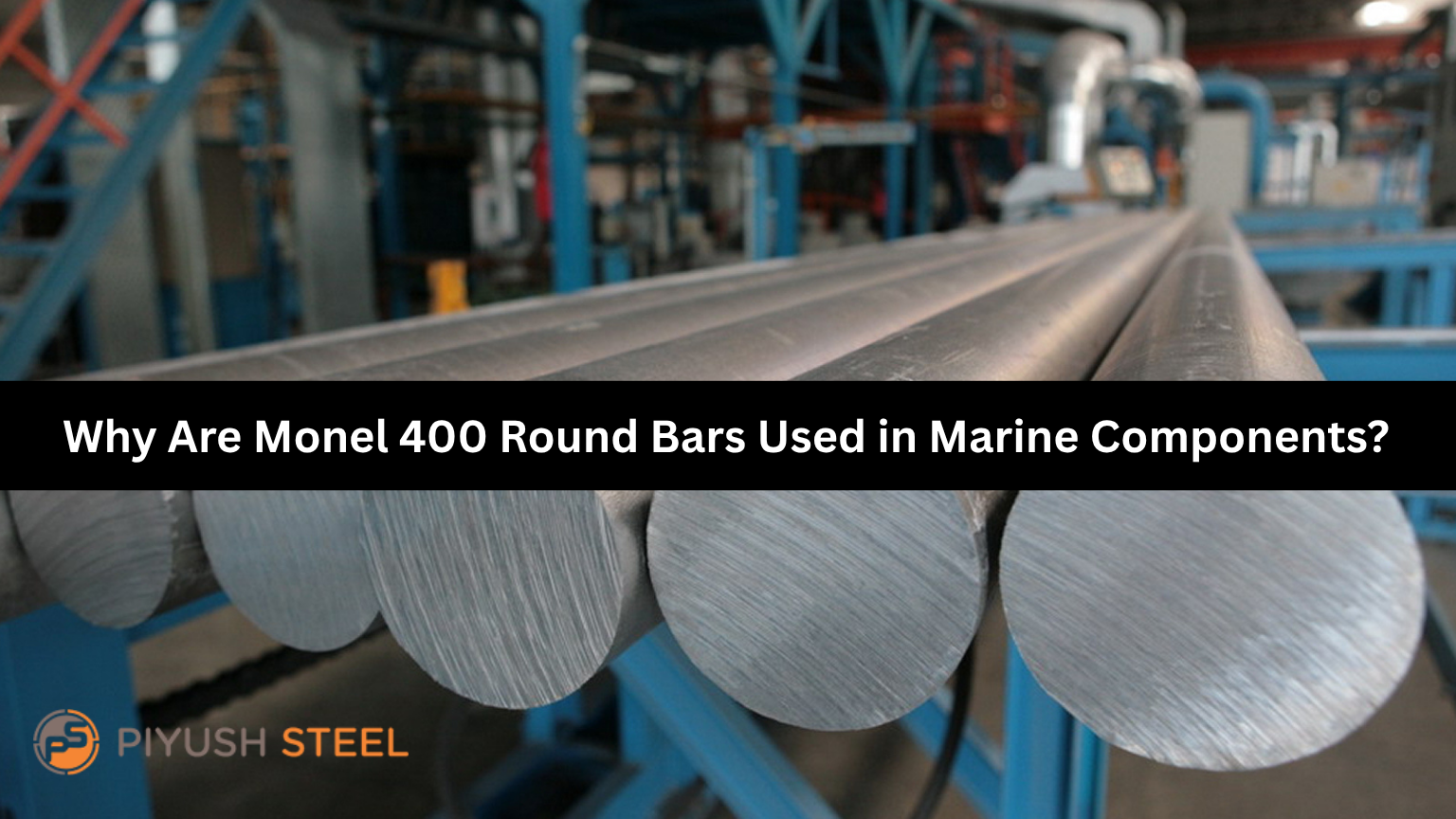
Why Are Monel 400 Round Bars Used in Marine Components?
Introduction
Monel 400 is a nickel-copper alloy valued for its resistance to seawater, salt, brine, and other marine corrosion conditions. Material selection matters enormously for components that run wet and chloride-exposed year-round, since a poor match shows up as premature failure long before it should. Monel 400 Round Bars provide a machinable starting material for components such as shafts, stems, pins, and fasteners used in marine equipment.
What Challenges Do Marine Components Face?
Continuous Seawater Exposure
Unlike other situations where components are sometimes exposed to seawater, those that are immersed or routinely wetted by seawater are under an ongoing corrosion pressure that never really eases up.
Salt and Chloride Attack
Chlorides also attack the protective surface layers of many metals, hence speeding pitting and general corrosion over time.
Moisture and Humidity
Even if the parts are not immediately immersed, the constant dampness of the sea exposes them and maintains the corrosion processes active at all times.
Mechanical Loads and Vibration
Shafts, fasteners and drive components are subject to genuine mechanical stress besides the corrosive environment, and vibration adds fatigue risk to the mix.
Erosion and Wear
Flowing seawater and moving parts introduce erosion alongside corrosion, compounding material loss in ways a purely corrosion-resistant material might not fully address.
How Does Monel 400 Address These Marine Challenges?
Resistance to Seawater and Brine
Monel 400 holds up well in components exposed directly to seawater and saline solutions, maintaining surface integrity where standard alloys would degrade.
Resistance to Chloride-Induced Corrosion
Nickel-copper alloys are considered for chloride-rich marine environments because their composition resists the pitting and crevice attack chlorides typically drive in less suitable materials.
Strength Under Mechanical Loads
Mechanical strength contributes directly to reliable performance in shafts, rods, fasteners, and other machined parts that need to carry load without deforming or fatiguing prematurely.
Resistance to Stress Corrosion
Monel 400 offers resistance to certain forms of stress corrosion cracking in demanding service conditions, an important consideration for components under sustained load in a corrosive environment.
Monel 400 Round Bars: Which Marine Components Benefit Most?
Pump Shafts
Seawater-handling pumps need shafts that combine corrosion resistance with mechanical integrity, since a compromised shaft threatens the whole pump’s reliability.
Valve Stems
Valves exposed to marine fluids need reliable, repeatable performance, making stem material selection a real factor in long-term valve function.
Fasteners and Bolting
Corrosion-resistant fastening components matter throughout marine assemblies, where a failed fastener can compromise an entire connection.
Propeller and Drive Components
Propeller and drive applications need both strength and resistance to sustained seawater exposure, given the combined mechanical and corrosive stress involved.
Marine Heat Exchanger Components
Corrosion-resistant materials support equipment handling seawater or saline fluids, particularly where heat-transfer surfaces face constant fluid contact.
What Makes Round Bar Form Useful for Marine Components?
Round bars serve as practical starting material for machined components because they suit turning, milling, and other standard machining processes without unusual setup requirements. That makes them a natural fit for shafts, rods, pins, stems, and other cylindrical parts common across marine equipment, where a machine shop can work from stock bar rather than a custom casting or forging.
Monel 400 vs Stainless Steel for Marine Service
| Factor | Monel 400 | Stainless Steel |
| Seawater Resistance | Excellent in many conditions | Depends strongly on grade |
| Chloride Exposure | Well suited to many marine environments | Higher grades may be required for demanding exposure |
| Mechanical Strength | Good | Varies by grade and condition |
| Marine Hardware | Suitable for demanding applications | Widely used for general marine applications |
| Material Cost | Generally higher | Varies considerably by grade |
| Selection Priority | Severe corrosion resistance and reliability | Broad range of corrosion and mechanical requirements |
The better choice depends on seawater chemistry, temperature, loading, exposure duration, and the specific component’s requirements neither material wins across the board.
Why Is ASTM B164 Important for Monel 400 Round Bars?
ASTM B164 is the relevant specification when sourcing nickel-copper alloy rod, bar, and wire products, and checking material against it matters for real assurance. Buyers should verify chemical composition, mechanical properties, dimensions, testing, and certification against the required specification before accepting delivery, rather than assuming compliance based on the material’s general reputation.
What Should Engineers Check Before Selecting Monel 400?
Select the correct material specification to prevent any premature component failure. Engineers must have to anlyse the several operating parameters before finalizing procurement.
Seawater and exposure
Confirm actual chloride concentrations, flow rates and oxygen levels to ensure resistance to brackish water biofouling for the alloy.
Loading component
Calculate pressure, tensile and structural stress requirements. Ensure that the round bar can withstand the regular mechanical stresses of operation.
Operating Temperature range
Thermal environment consideration: Temperatures are pleasant within the stable sub-zero to high engineering performance range of the alloy.
Standards apply
Compare project compliance indicators to global material benchmarks (eg ASTM B164) to ensure structural and chemical homogeneity.
Testing & Certifying
We can provide certified mill test reports, including ultrasonic, destructive and hydrostatic testing for full material traceability and security.
How to Choose a Monel 400 Round Bars Supplier?
Buyers must evaluate key quality factors like material traceability, ASTM compliance, and test reports before selecting a Monel 400 Round Bars supplier. Reviewing these specifications along with dimensions, surface finish, and supply consistency ensures the material performs reliably once installed.
Conclusion
Monel 400 Round Bars are ideal for many maritime components, as they offer a combination of seawater corrosion resistance, mechanical strength, toughness and consistent performance in chloride-heavy situations. The final choice of material should be determined by the actual marine exposure, design of the component, service conditions and applicable specifications and not by general assumptions as to the repute of the alloy.